
What Do Cracker Barrel’s Logo Flip and Backflip Reveal About Our Unnameable Market Self
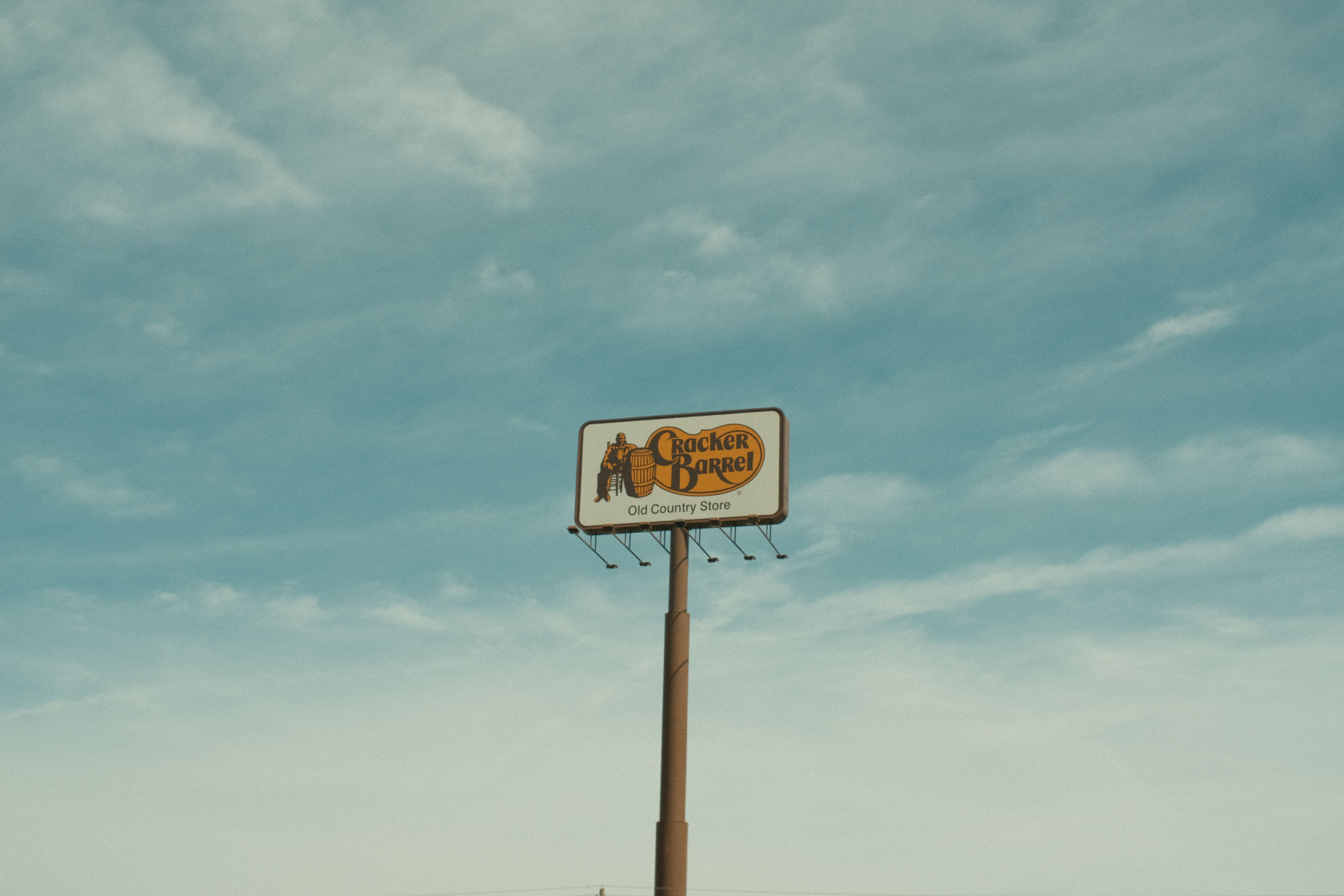
The ritual of going to Cracker Barrel isn’t just a meal; it’s a ceremony of belonging. A porch-swing pause before the day’s rush, a shared memory of pine-paneled aisles, rocking chairs, and the old-world whiff of coffee and country sweetness. Then came the logo, a bold, gleaming rebrand—an attempt to rewrite the emotional DNA of a brand that has thrived on steadiness, familiarity, and the soft gravity of nostalgia. And then, astonishingly, the brand walked it back. Back to the old emblem, as if waking from a dream in which the cost of ambition was alienation rather than advancement. The whole sequence didn’t just register as a misstep in a financial quarter; it felt like a diagnostic on the modern psyche: do we even still recognize ourselves when a company’s face insists it has changed our inner weather?
Hook: Free Will vs. Brand Will
We tell ourselves we are free agents: choosing meals, choosing logos, choosing loyalties. Yet the Cracker Barrel capriciously flipping its symbol—then undoing the flip—appears not as a corporate decision but as a public test. If you peel away the gloss, you see a question that haunts contemporary consumer life: how much of what we call “preference” is truly ours, and how much has been installed, rehearsed, and nudged into our nervous systems by a century of branding that has learned to read our impulses with a sensitivity that would frighten a clairvoyant?
The terrifying subtlety of brand influence isn’t in the loud crescendo of a national ad blitz. It’s in the almost inaudible whisper of a single, seemingly innocuous update—the smile in the logo, the curve of a typeface, the color warmth, the moral posture of a brand’s promise. It is the moment you believe you are choosing, while your brain has already been scaffolded toward a particular sensation: comfort, trust, belonging, appetite. The logo that Cracker Barrel wore for a season didn’t merely identify the place; it attempted to re-script the emotional grammar that makes you walk through the door in the first place.
Dark Architecture: The Psychology of a Familiar Face
Branding isn’t a collection of shapes and hues; it is a discipline of applied psychology that operates with the precision of a clinical instrument. The badge becomes a consent form your senses sign, almost instantly, to join a tacit contract: you will feel seen, you will feel anchored, you will feel part of a lineage that stretches back to the initial spark of human settlement around a hearth. The rebrand attempted to alter this hearth-fire with a more modern flame—clean lines, minimalism, perhaps a nod to a universal “progress.” But the deepest drivers of human behavior—the fear of exclusion, the hunger for status, the vanity of self-improvement, the longing to be seen as more than just a consumer—linger just beneath the surface. When Cracker Barrel flirted with a fresh symbol, it was not merely testing a logo’s readability; it was probing whether the brand could still supply a sense of identity in a marketplace where identity is a primary currency.
Consider the ritual of dining out as a social adhesive: it is where you measure your taste against a social map, where your choice signals status, taste, and even moral stance. The rebrand risked destabilizing that map. The old logo—nostalgia’s typographic comfort—reassured you that this place knows who you are, while the new one offered the enticing possibility that you, too, could be a “modern” person who grasps the future. The failed promise of the new wasn’t simply the cost of the rebranding effort; it was the fear among regulars that the brand’s soul was being reallocated to a broader, thinner audience—a crowd that values novelty over continuity.
Transparency’s Paradox: The Lie That Says It Is Honest
Brands have become masters of revealing their strategies in the exact moment you think you’re reading their motives. They publish case studies, design rationales, “see the data behind the change” stories, and yet the effect remains counterintuitive: knowing the trick does not inoculate you against feeling the trick. The psychology is designed so you can acknowledge the manipulation and still lean in, because the manipulation has become an ally—an indicator that the brand cares enough to modernize, to grow, to stay relevant. The paradox is that the more a brand claims clarity and openness, the more it performs the work of invisibility in your emotional life. The Cracker Barrel logo swing between old and new was a public experiment in transparency: we can document the algorithm of the change, we can even explain the reasons; and yet the fundamental experience of belonging, of who we think we are when we sit in that booth, remains pre-linguistic, pre-argument, and deeply personal.
The back-and-forth, the reconnections and recertifications, reveal a deeper truth: we rarely vote for brands with our eyes alone. We vote with our bodies—hands steady on a fork, the cadence of a conversation, the way a familiar scent folds into the air. When the brand asked for permission to rebrand, it did not barge into living rooms; it asked permission to reframe a memory you carry around like a worn jacket. And when it scrapped that frame, it offered a confession—the confession that the brand’s attempt to reframe your memory ran ahead of your willingness to revise your sense of self. In short, the transparency is a performance; the audience, however, remains a living archive of past experiences, ready to resist even a well-intentioned update that threatens to erode the sense of continuity that makes a place feel like home.
Paradox and Realignment: Branding as a Mirror, Not a Map
Cracker Barrel’s oscillation between old and new exposes a crucial ambiguity in modern consumerism: the brand as both mirror and map. It maps out our desires, turning abstract needs into tangible offerings—food, atmosphere, identity markers—and it also mirrors our anxieties back at us. When the logo leaned into modernism, it reflected a hunger for reinvention; when it retreated to nostalgia, it reflected an aversion to destabilization, the fear that change will erase a memory we cling to. The consumer, in this framework, becomes both the subject and the property: we own the right to decide what fits our memory, even as our memory is being curated by forces that know how to present options as if they were not choices at all.
The paradox deepens when you notice that even the most “transparent” brands aren’t losing control of you; they are expanding their control by making you feel responsible for your own taste. They offer you a menu of acceptable selves, each one just disruptive enough to be exciting, yet safely anchored in the belief that you can still call this place home. The rebrand then is a case study in branding’s most tenacious trick: make the act of choosing feel like an expression of autonomy, even as you are navigating a carefully choreographed space that anticipates every impulse before you can name it.
Resolution: Where Does the True Self End and Engineered Influence Begin?
What Cracker Barrel teaches us—if we let the curtains part and listen closely—is that modern consumerism is less a marketplace of products than a theater of identity production. The “self” you present when you sit at a table is a negotiated, market-assisted persona, constantly cross-checked against a social script that brands are either reinforcing or contesting. The back-and-forth over the logo was less about aesthetics and more about the fragile border between memory and meaning: how a brand can become a custodian of your past while simultaneously negotiating your future.
If we are to walk away with a more sober view, we must acknowledge two unsettling truths. First, the brands we call “nostalgia” are not simply marketing engines; they are architects of emotional reality, shaping how we present ourselves to the world and how we interpret our own histories. Second, even when we “know the trick,” we still gravitate toward the softened certainty of the familiar, because the scent of belonging is a stronger motivator than the banner of novelty.
So next time you choose Cracker Barrel, or any brand for that matter, pause at the doorway-long enough to notice what your choice promises to your own sense of self. Are you selecting a memory, or are you selecting a future that merely resembles a memory? The answer isn’t just about branding preferences; it’s about the ongoing negotiation between who you think you are and the engineered impulses that ask you to become more of it each day. In that tension lies the haunting, almost spiritual, truth of contemporary consumer life: your favorite brands are not just services you consume; they are the quiet authors rewriting the manuscript of your identity, one logo at a time.