
What It Means to Start from Silence: Branding as a Quiet Dictator of Desire
The moment you decide to start a brand, you stand at the edge of a mirror you haven’t yet met. The vibe in your head is vivid, almost tactile: a smell of possibility, a rhythm you swear can be heard in your bones. But paper? Ink? Colors? Fonts? The empty page is a verdict, announcing that your inner conviction must submit to systems you’ve never bothered to name. You tell yourself it’s about taste, about taste-making. Yet what if the very act of choosing a color palette is less about aesthetic preference than it is about submitting to a set of invisible governors—things you didn’t choose so much as they chose you, long before you even thought to plot a moodboard?
The hook comes not as a siren song but as a whisper that slides into your ear when you’re alone with your laptop and a blank canvas: your sense of “free will” might be the most precious, stubborn fiction you carry. You believe you’re deciding colors, fonts, logos, but the market has already decided for you, in the only language that truly matters to a consumer: emotion. The taste you defend as authentically yours may already be tagged, categorized, and indexed by systems you never agreed to—algorithms that imagine your future cravings and map your possible loyalties with eerie precision. Your brand, in this framing, is less an outward projection and more a disciplined alignment of inward impulses—a map drawn by others who know your desires better than you do.
The Dark Architecture begins in the quiet, in the half-lit hours when you stare at a font that “feels right” and wonder why the choice feels heavy, almost sovereign. Branding is not a banner you hang; it is a mechanism that tunes you, not unlike an instrument in an orchestra you didn’t audition for. It weaponizes the oldest human drivers: the terror of exclusion, the unspoken race for status, the vanity that wants to appear just a little more aligned with the tribe than yesterday’s version of you. It thrives on belonging, on the sense that you are choosing something that says, unequivocally, “I am part of something larger.” And where does that sense come from if not from the same wellspring that social media taps into each time a notification blares or a like lands with a soft, approving thud?
Consider the first brushstrokes you hesitate over: a color that says “premium,” a typeface that says “serious,” a logo that says “trustworthy.” You want to be seen as distinct, yet you also crave safety. Branding sells a curated solution to a universal ache: the ache of not belonging, the ache of feeling drafted into a story larger than your own. In that sense, brands are not simply selling products; they are selling identities—an attainable version of self that promises you’ll never again have to admit you’re still figuring out who you are in the company of others. The irony is almost deliciously cruel: by choosing to create a brand, you enroll in a story where your customers do not merely buy what you sell—they buy who you are, projected through you, defined by you.
And then there is the paradox of transparency. Modern branding loves a candid confession, a behind-the-scenes look, a “we’re just humans here” narrative that supposedly invites trust. The truth is more unsettling: even when consumers know the trick, the lever works anyway. The moment you acknowledge that a brand designs your emotional weather, you do not suddenly become free from its influence. Knowledge doesn’t inoculate you; it reframes your fear. If you understand the marketing system, you might become more discerning, yet your longing remains intact, and longing is a powerful fuel. The trick isn’t secrecy; it’s invisibility that feels almost total. It operates in the spaces where attention is scarce and desire is abundant—the zones where a well-timed visual cue or sonic cue can nudge a decision before you’ve had time to rationalize it.
So why does transparency feel like a betrayal when it’s so widely acknowledged? Because the core currency of branding isn’t information but alignment. It seeks not just to inform you about a product—it seeks to align your sense of self with a marketplace narrative that promises coherence, progress, and belonging. You are asked to accept that your preferences can be read, predicted, and gently corrected by the shapes and sounds of a brand ecosystem that presumes to know you better than you know yourself, at least in the moments where you’re willing to concede a little more control for a stronger feeling of being seen.
The paradox, then, is that you can know you’re being engineered and still feel the pull anyway. Awareness may illuminate the path you’re not willing to abandon—the memory of how a color makes you feel, the texture of a font that carries personal memories of trust, the logo that feels like a familiar handshake. Yet awareness does not erase the ache that branding is designed to awaken: the desire to be confirmed, to be ranked, to be chosen as the protagonist in a narrative where success is a tasteful, carefully constructed sheen. The “I know it’s marketing” shrug can coexist with a genuine, unshakable preference for a brand that has learned to speak your language with the cadence of a friend.
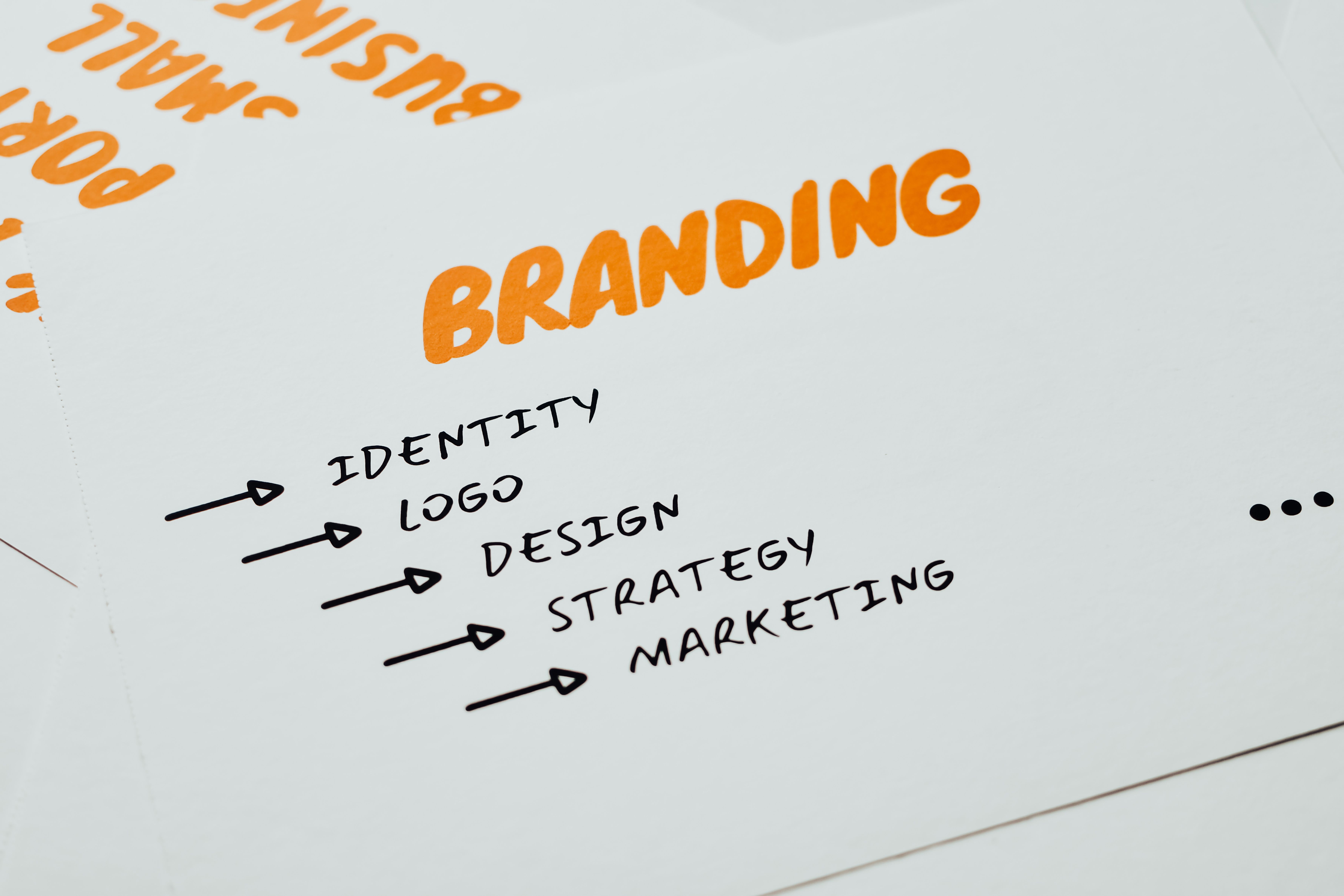
Where does this leave the modern self—especially the entrepreneur who wants to begin from scratch? It leaves you perched at a crossroads where intention and technique intersect, and the boundary between authenticity and manipulation becomes a moral weather. It asks you to name what you are really selling when you offer a brand identity: is it merely a design system—a palette, a logotype, a set of guidelines—or is it a promise that the customer’s inner narrative will be upgraded by the mere act of choosing you? In that sense, starting from scratch is not a neutral act but a power move—an attempt to set the terms of your own social existence by shaping others’ perceptions of your worth before words about value ever appear in the room.
The resolution, then, is not to abandon branding but to inhabit it with a more conscientious awareness. The question you must ask is not only “What colors, fonts, and logos capture the vibe?” but “What human void am I trying to fill, and who profits from that void being felt as a need?” If branding is a discipline—one that makes transparency a fashion, not a guarantee—then the ethical student of branding is the one who asks: how do we design identities that honor autonomy rather than harvest it? How do we tell stories that empower choice without exploiting the fear of exclusion? How can we build brands that invite self-authorship rather than prepackaged allegiance?
As you tilt your head toward the glossy invitation of a new venture, you might realize that your true act of branding is not the creation of a static image but the forging of a living conversation between a person’s evolving sense of self and a marketplace that pretends to be only a backdrop. The question that remains—precisely because it unsettles the comfortable illusion of total control—is this: where does your true self end and the engineered identity begin? And might the deepest purpose of branding be not to erase that line but to reveal it with brutal honesty, so that people can choose with a clearer map of their own longing?
If you’re brave enough to ask that, you’ll discover a surprising thing: the most haunting brands aren’t the loudest; they’re the ones that seem to know you better than you know you—yet they leave you with the ultimate decision stone-cold in your palm. The true alchemical trick of modern brands isn’t merely to persuade; it’s to persuade while making you feel like you are choosing yourself. And in that eerie marketplace of taste and belonging, your greatest branding achievement might be this: to build something that asks you to walk toward your own boundaries with eyes wide open, rather than surrendering them to a preassembled identity.
So go ahead, start from scratch. Let your vibe emerge onto the page and then confront it with the unsettling question: what am I really selling, besides a feeling? And as you answer, listen for the echo of a larger chorus—the quiet, unanswerable tension between agency and allure, between authenticity and the designed self, between the honest hunger to belong and the engineered promise that belonging is enough. The curtain never truly closes on branding; it slides aside just enough to reveal the human hunger it feeds—and the responsibility we carry, each time we reach for a brand to answer a need we might have learned to name only after it’s been satisfied.