
Title: The Quiet Grip: How Brand Artistry Ghosts Our Choices
I.
We think we move through the world of flavors, logos, and loyalty cards with the feathery lightness of free will. We tell ourselves we choose what we want, when we want it, because we are autonomous, rational agents navigating a market of options. And yet, in the morning hush, as the city exhales steam and the streetlamps drip amber onto wet pavement, something older and louder speaks through the hum of the air: a whisper that sounds like choice but feels like invitation, a subtle choreography that pretends to be preference while quietly pruning possibility.
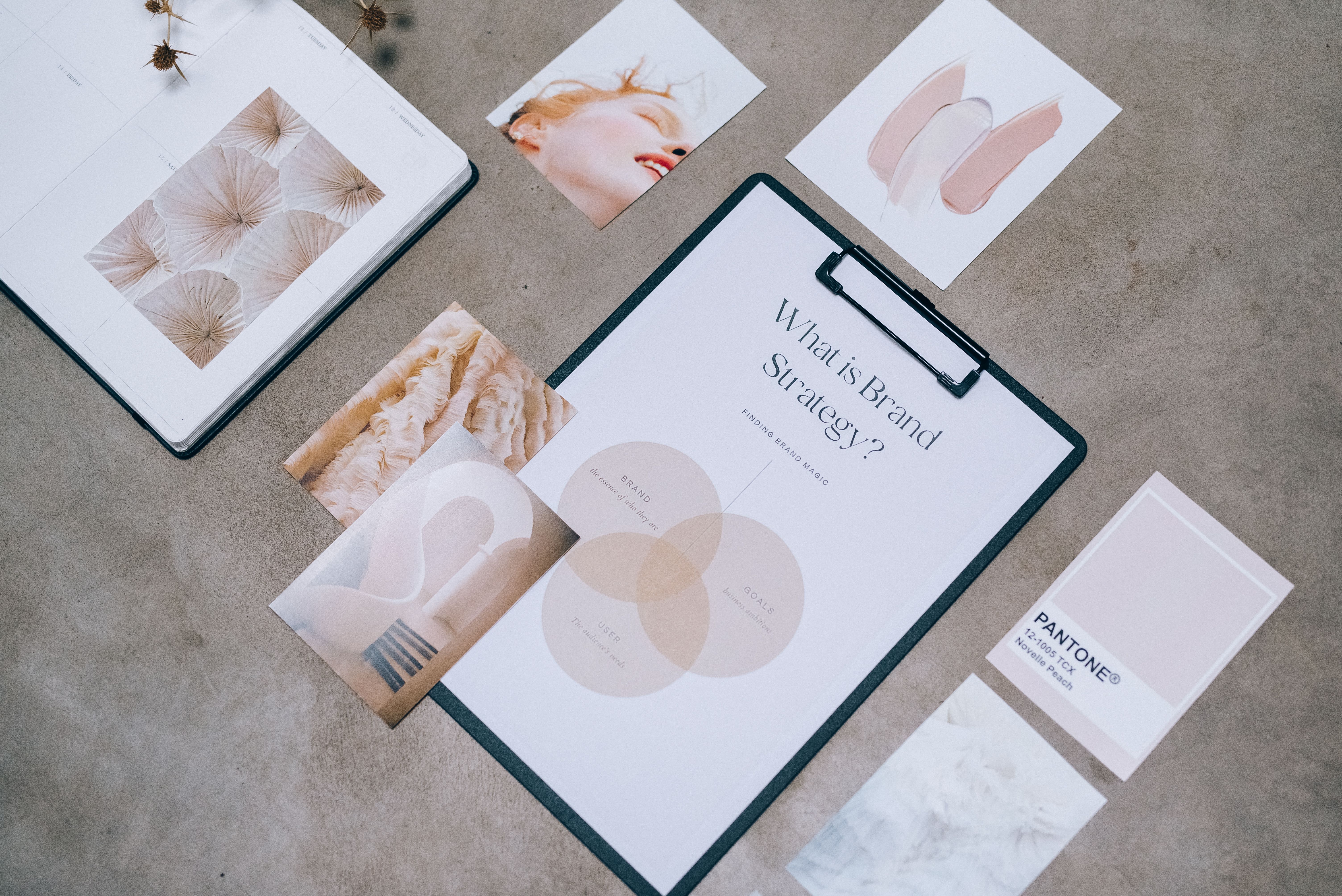
This is not a lecture about a single brand or a single storefront. It is a dissection of a larger architecture—an invisible cathedral built from color theory, scent psychology, social signaling, and the most ancient human cravings dressed in modern retail lipstick. Brand thinking has learned to operate with transparency so complete that it becomes almost invisible, a background hum that engineers desire while promising authenticity. The result is not manipulation in the crude sense, but a precise orchestration of conditions under which taste, loyalty, and self-image align with a predefined script. The effect is not to control every thought, but to tilt the horizon of possibility so that the sensible, “I chose this,” becomes a kinder version of, “I am this.”
II.
The Dark Architecture begins not with slogans but with the architecture of experience. Brands do not merely sell a product; they curate a life. They study the terror of exclusion—the social sting of not belonging—and convert it into the thin, reassuring line of belonging that comes with a brand badge, a color palette, a ritual morning visit. They translate status into small rituals: the correct cup, the right order, the signature posture of self-presentation when you carry the coffee down the street and into a meeting that will be judged as much by your drink as by your demeanor.
This craft thrives on hidden vanity and the desperate need to appear as the protagonist of one’s own life story. Modern brands weaponize the psychology of identity: the need to signal who we are before the world validates it, the desire to be seen as part of something larger than ourselves, the longing for a tribe that claims us as regulars, not strangers. They offer a veneer of personal growth—an aura of self-optimization, of daily rituals that promise improvement, of micro-achievements that register as moral progress. And within that veneer lies the suction of belonging: the done-for-you sense that, in a crowded marketplace, you are being welcomed, not merely served.
To sell a product is to sell a solution to a psychological void the brand helped to create. The void is never named outright; it lives in the quiet corners of memory and insecurity, a hunger that feels both private and universal. A brand inserts a narrative where there was blank space, offering not just a commodity but a plausible identity. You are the kind of person who orders this drink at this time, who chooses consistency, who values efficiency, who prizes community. The result is a self-fulfilling prophecy: you become the character the brand has already imagined you to be.
III.
The Paradox of Transparency sits at the center of this labyrinth. Brands advertise explicitly, celebrate openness, and appear to invite scrutiny. In an era of reviews, ratings, behind-the-scenes looks, and founder livestreams, the doors seem wide open. Yet the psychology remains intact, even when the audience knows the game. Knowing the trick does not inoculate a consumer from feeling the effect; it only clarifies the trick’s mechanics while not dissolving the ache it exploits.
This is not a simple moral failing of clever marketers. It is the recognition that human attention is not a finite resource to be guarded so much as a landscape to be mapped. We crave meaning, we crave certainty, we crave a sense that our daily routine has structure and significance. A brand supplies these cravings in crisp, repeatable forms: a scent that signals comfort, a color that signals status, a ritual that signals belonging. The mind, even when educated about the game, finds it easier to accept a familiar structure than to improvise a wholly new one in the face of ambiguity. Transparency becomes a kind of theater—an open stage where the audience pretends to perform its own agency while the director quietly remains in control.
In this paradox, critical awareness does not shatter influence; it reframes it. The audience learns the choreography, but the music continues. The brand leverages skepticism as a tool, inviting scrutiny while preserving the emotional core that makes the ritual feel sacred. The effect is a double bind: the more we know, the more we feel seen, and the more we feel seen, the stronger the pull of the ritual that granted that visibility in the first place.
IV.
The ultimate question—where does the individual end and the engineered influence begin?—lingers at the edge of every café table, every loyalty app receipt, every morning ritual of picking up a familiar drink. The modern consumer navigates a market that promises self-dempowerment through choice yet delivers a carefully curated corridor of permissible selves. It is not a conspiracy in a dark room; it is a field of subtle gradients where influence moves like a tide. It asks not for blind obedience but for a kind of consent you gently renew with each purchase, each refill, each social cue observed in the glow of a storefront window.
To recognize this is not to surrender agency; it is to sharpen perception. It is to notice how a brand’s aesthetic—its typography, its scent footprint, its spatial design—tries to align with the most intimate notes of our identity. It is to sense how the brand trusts human psychology not as a liability but as a map: a map of what we fear, what we crave, and what we hope will finally declare us worthwhile.
V.
In the end, the question remains not whether brands shape us, but how deeply we let them shape us to begin with. The haunting truth is that the most powerful branding does not shout; it invites, it glides, it becomes a habit so familiar that recognizing it feels like waking up from a pleasant dream. We walk into rooms that smell like rain on roasted beans and see our reflection in the glossy logo, acknowledging the charm while pretending it is merely aesthetic. Yet the charm is more than surface; it is a carefully engineered resonance with the longing to belong, to be seen, to believe that small rituals can cradle a larger sense of self.
The unsettling revelation, then, is not that we are puppets but that we are players who forget the strings exist. We arrange our days around the cadence of a brand’s world, even when we claim to chart our own course. The true test of freedom, finally, is not whether we resist every lure, but whether we can inhabit a life in which taste, loyalty, and identity are not the currency of conformity but the chosen instruments of personal meaning—used with discernment, renewed with critique, and never allowed to erase the inner weather that makes us human.
If we look with unflinching attention, the curtain of branding peels back just enough to reveal something ancient and shared: the human desire to belong, the fear of exclusion, the wish to narrate a life as if it were a story worth telling. Brands will continue to choreograph this drama, calling to us in the language of convenience, happiness, and progress. Our opportunity—our responsibility—remains: to listen with clarity, to question with courage, and to decide, in our own terms, what it means to live a life that feels like ours, rather than a life tailor-made to feel adequate within the marketplace.
And perhaps, in that stubborn act of discernment, we reclaim a fragment of the self that no logo can own—a self that can sip coffee not as a verdict on identity but as a simple, conscious moment of being. The rest, as the city wakes and the steam rises, will continue to unfold in the perpetual tension between desire and autonomy, between the beauty of rituals and the obligation to choose—and to choose again, with eyes open.